Technology gets cheaper
Tentative Priors About the World
“Predicting the future is not so hard"; “people keep meta frameworks in mind surprisingly rarely"; “it's a good idea to list out your tentative priors about the world"; “spit out ideas on Substack and see how quickly you get lambasted for them to learn QUICKLY"; “invest in the conversation with Claude from 22 days ago squatting on the floor of a bookstore —> public posts pipeline"; “what does a non-gears-level-model of the world look like?”; “how good can your world model be if it relies on a bunch of black box intuitions?”; “people keep being surprised when these priors are wrong".
In other words, I'm going to say a few fairly outrageous things, tack on empirical observations, and made absolutely no local efforts to discovering why the world works like this. This is Tentative Priors About the World!
If a technology exists, it gets cheaper over time.
Similar to “when a technology is feasible in small quantities, it's feasible in large quantities"; “when one variable interfacing with another can be affected, you can interface with the other variable (see at its simplest: the shape of a wind turbine is similar to the shape of an airplane propeller)”; “having a grip on a physical law is often enough to extract technology out of it".
Examples:
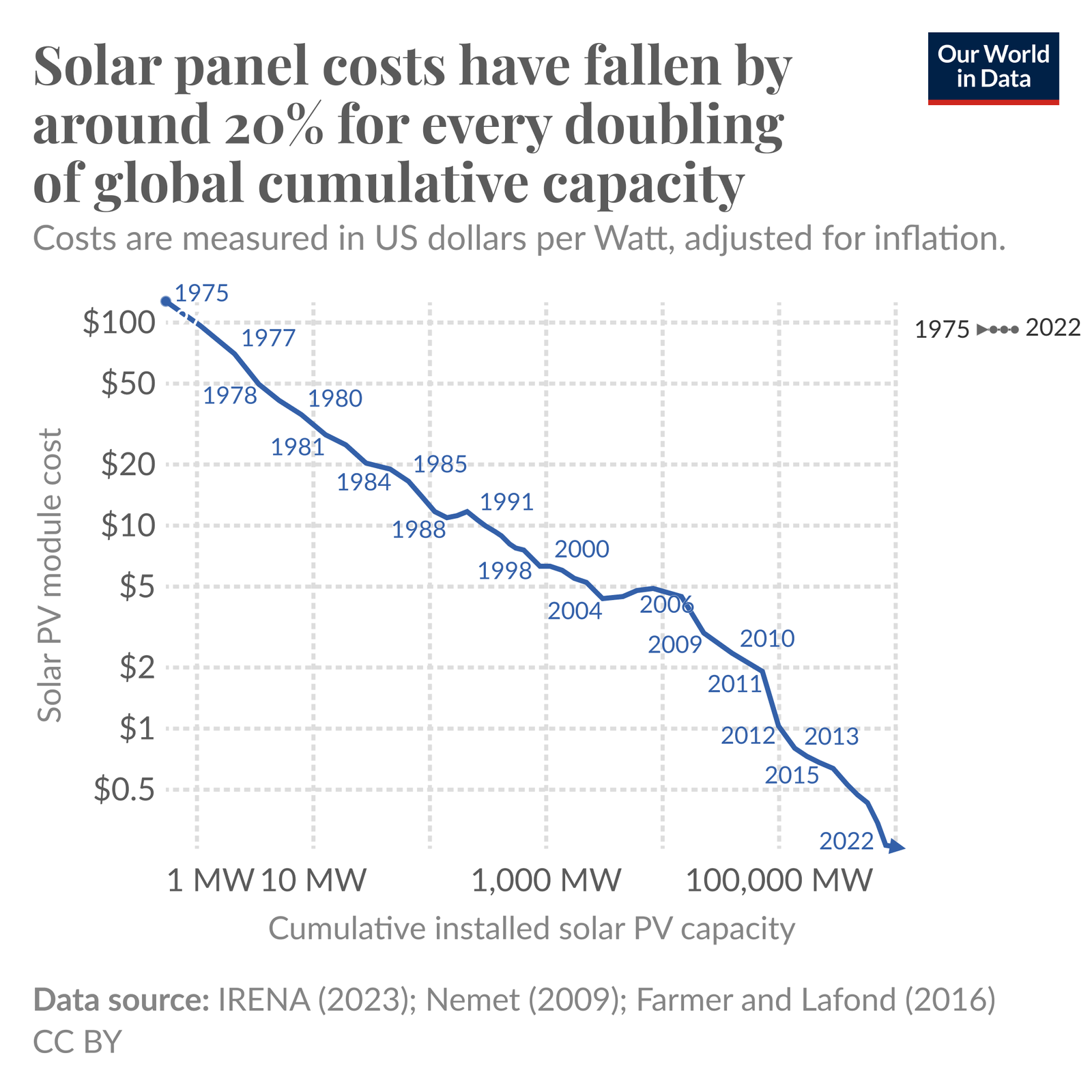
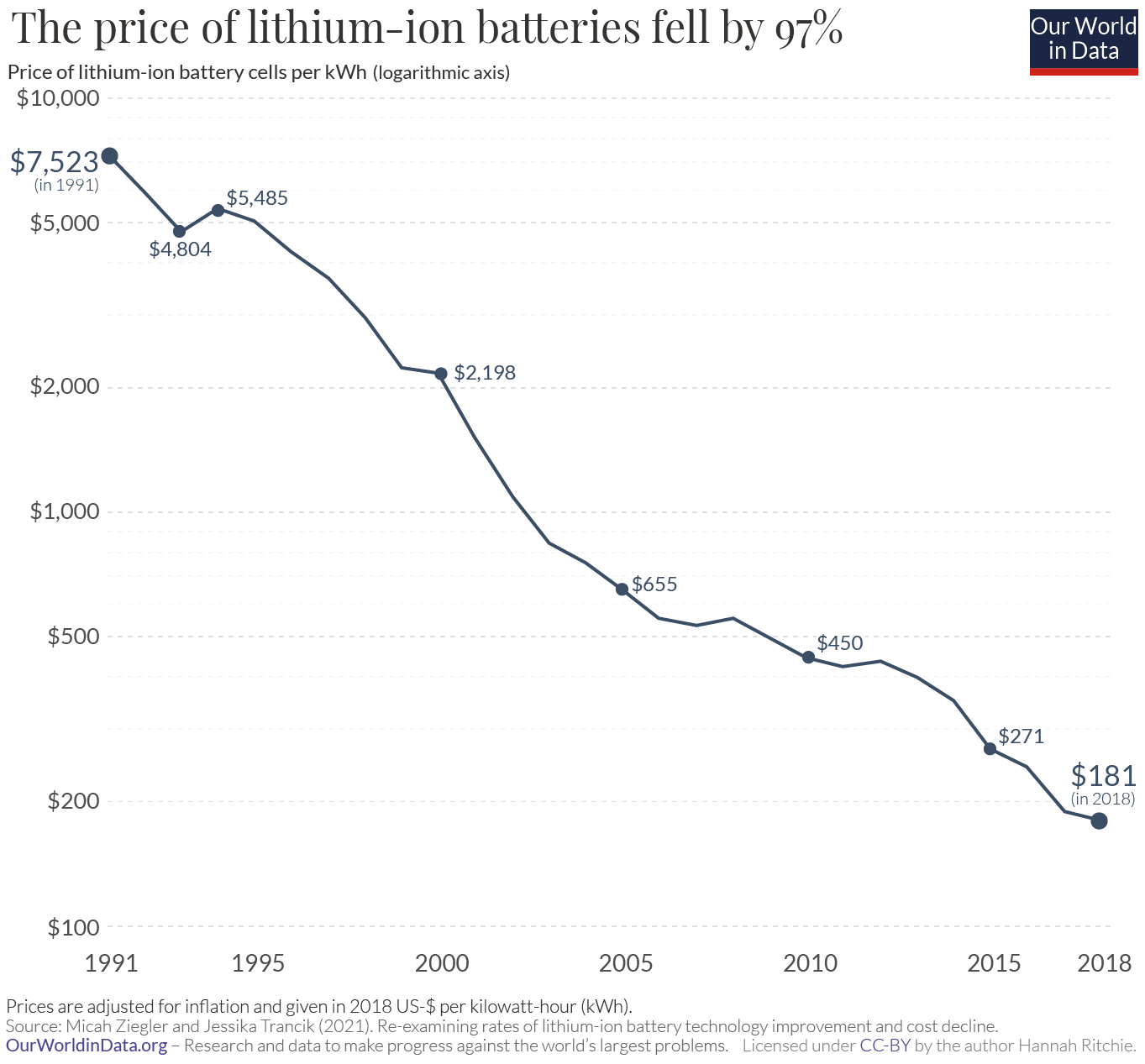
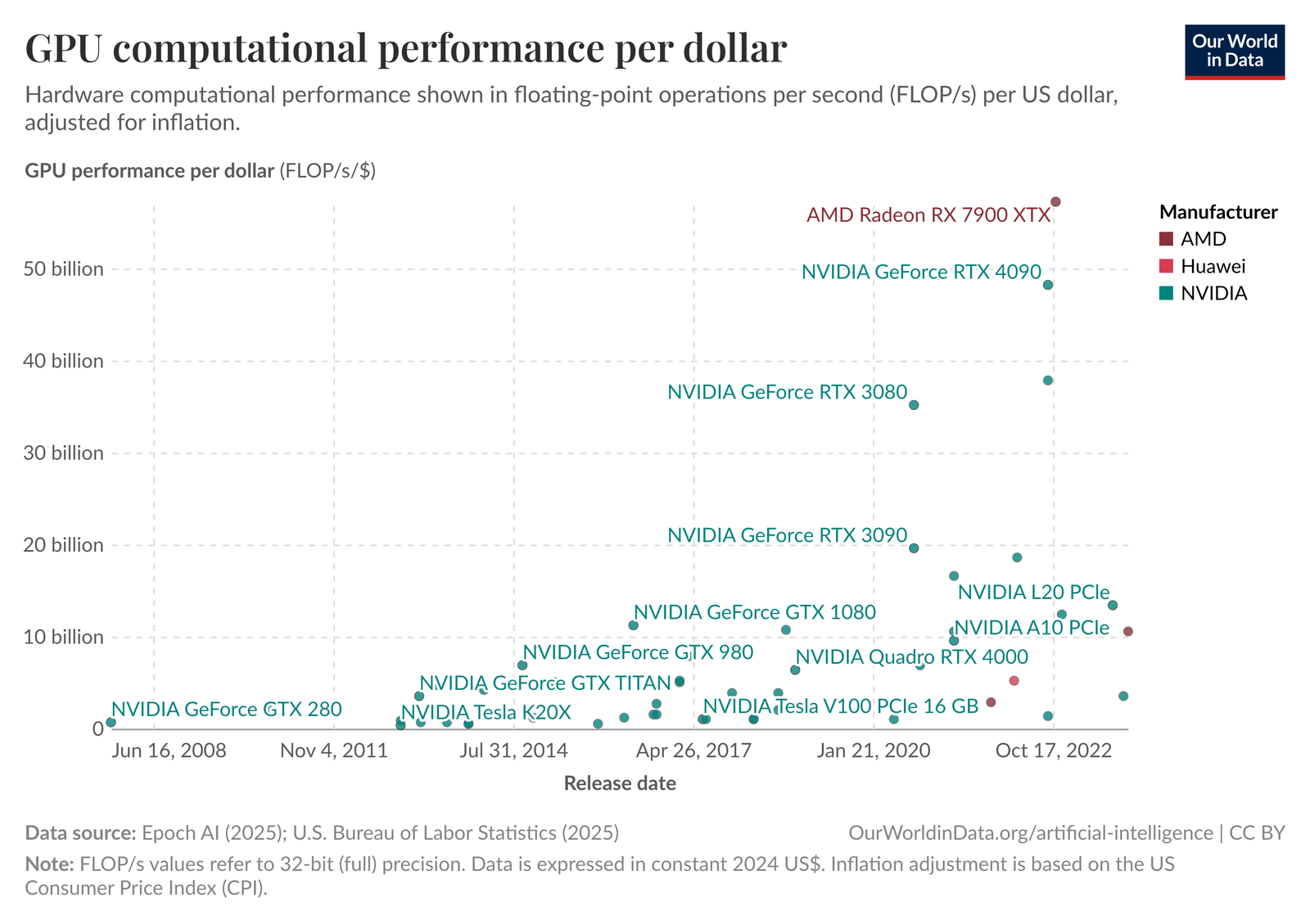
P(a given technology gets cheaper over time | it exists)≈1 feels like a strong prior to me, in the sense that if there are ~100 technologies that future historians might bother drawing maps about, I would make money betting that they would become cheaper.
But P(a given technology gets cheaper over time | it exists and is highly regulated for some reason) is going to be much farther away from 1. Nuclear power, for instance.
Market pressure, i.e. demand, seems to be a huge driver of technologies getting cheaper. So if you want to make the prior a little more precise, it's “if this technology exists and is exposed to a lot of market demand, it gets cheaper over time".
In general, I think this prior holds.
Why is it not more common in people's world models? (In my experience, it is.) Why are people consistently registering surprise about solar panels being the cheapest form of marginal energy installation in 2025? What's so crazy about compute/intelligence becoming too-cheap-to-meter in a matter of years?
Perhaps because it's easy to get caught in an ambient sensation of impossibility, “this is really fucking hard", man-in-the-arena-like difficulty of pushing the technological frontier.
After all, while technological progress / cheapness has continued at steady rates throughout all of history, from the inside the feeling is ever-decreasing rates of insights-per-hour, breakthroughs-per-dollar, understanding-of-the-whole-by-the-part:
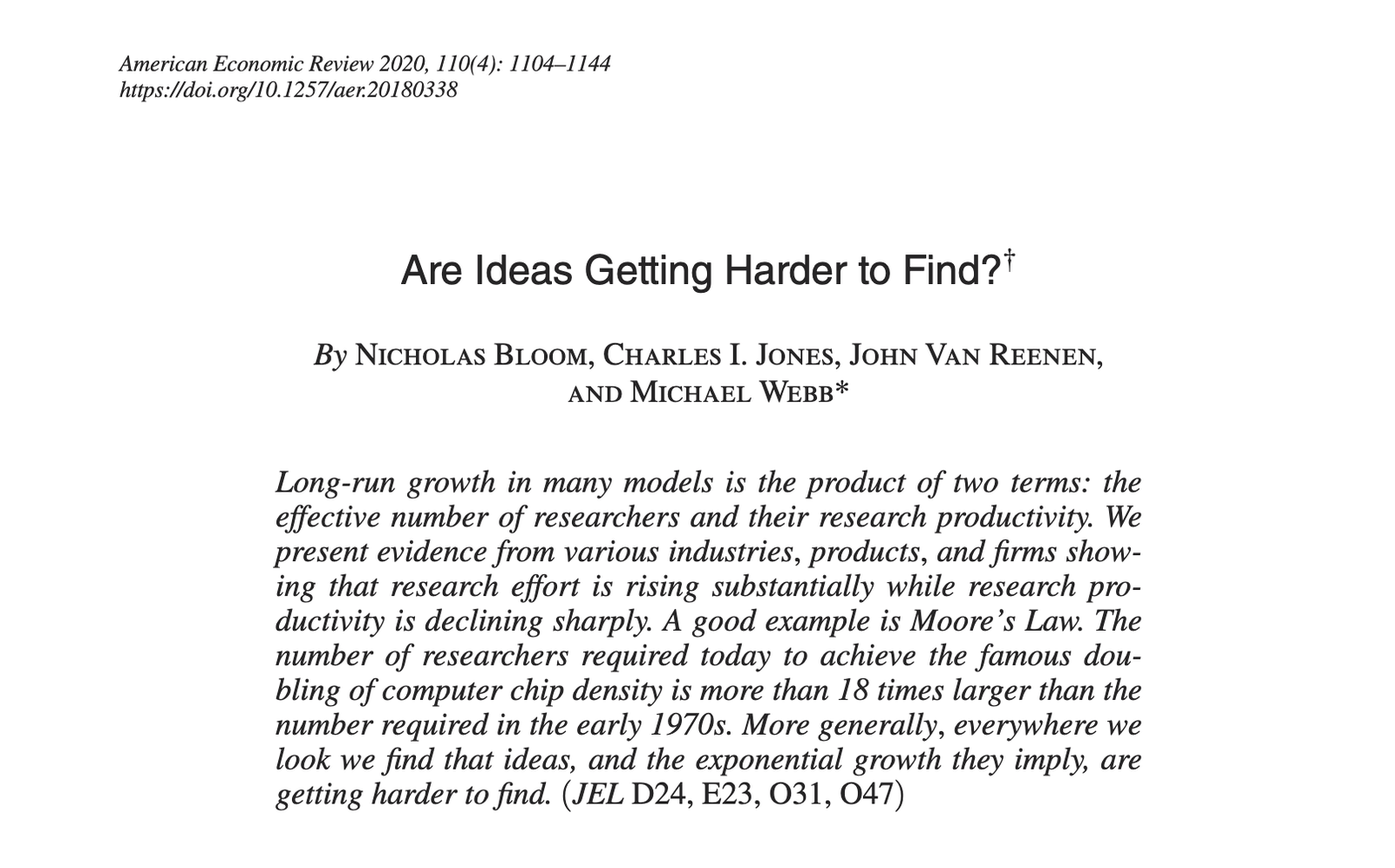
Indeed, science-per-unit is slowing down.
Hence Twitter vibes along the lines of “deep learning is hitting a wall” or “GPT-4.5 is the largest pre-training run ever but they stopped using it months after its release that must mean pre-training is hitting a wall” or “Grok 4 proves RL does not scale well".
Hence also the difficulty of imagining how something so complex as a handheld game console in 1989 could ever be driven down to a reasonable price. And yet, if you're an outside observer (e.g. if you live somewhere after the year 1989), the prior holds.
(If you're on the inside, it might hold too, but do not overrate the utility of your own observations. And the amount of sweat it'll cost you to e.g. make the GameBoy cheap will detract you constantly from the correct conclusion that it'll “merely take a year” to do so.)