Reducing utopia's suicide rate
“We could just pets” sure and we could just ignore human volition
Noticing individual acts of someone’s volition are finite: eat lunch, win trophy, hang out with friend. We grow bored quickly, we’re scatterbrained and distracted, a chair grows uncomfortable no matter how cushy it was when you first placed your derrière there. Aggregate acts of someone’s volition are not finite: you eat lunch, then move on to reading a book. If life is a long series of satisfying different itches, you can separate “making you happy” into two problems: satisfying each itch, and ensuring the broad arc of your itch-scratching is satisfying. The former is something the free market is goated at: TickTocks, sandwiches, books are in plentiful supply, and are kept cheap. You can also easily benchmark how good LLMs are at solving specific subproblems in this category, like whipping up your website, university essay, or flight tickets. Number Go Up: there’s little doubt that specific issues like cancer, unexplored movie genres, or novel phone factors can and will be solved, at a rate of roughly 2% year on year.
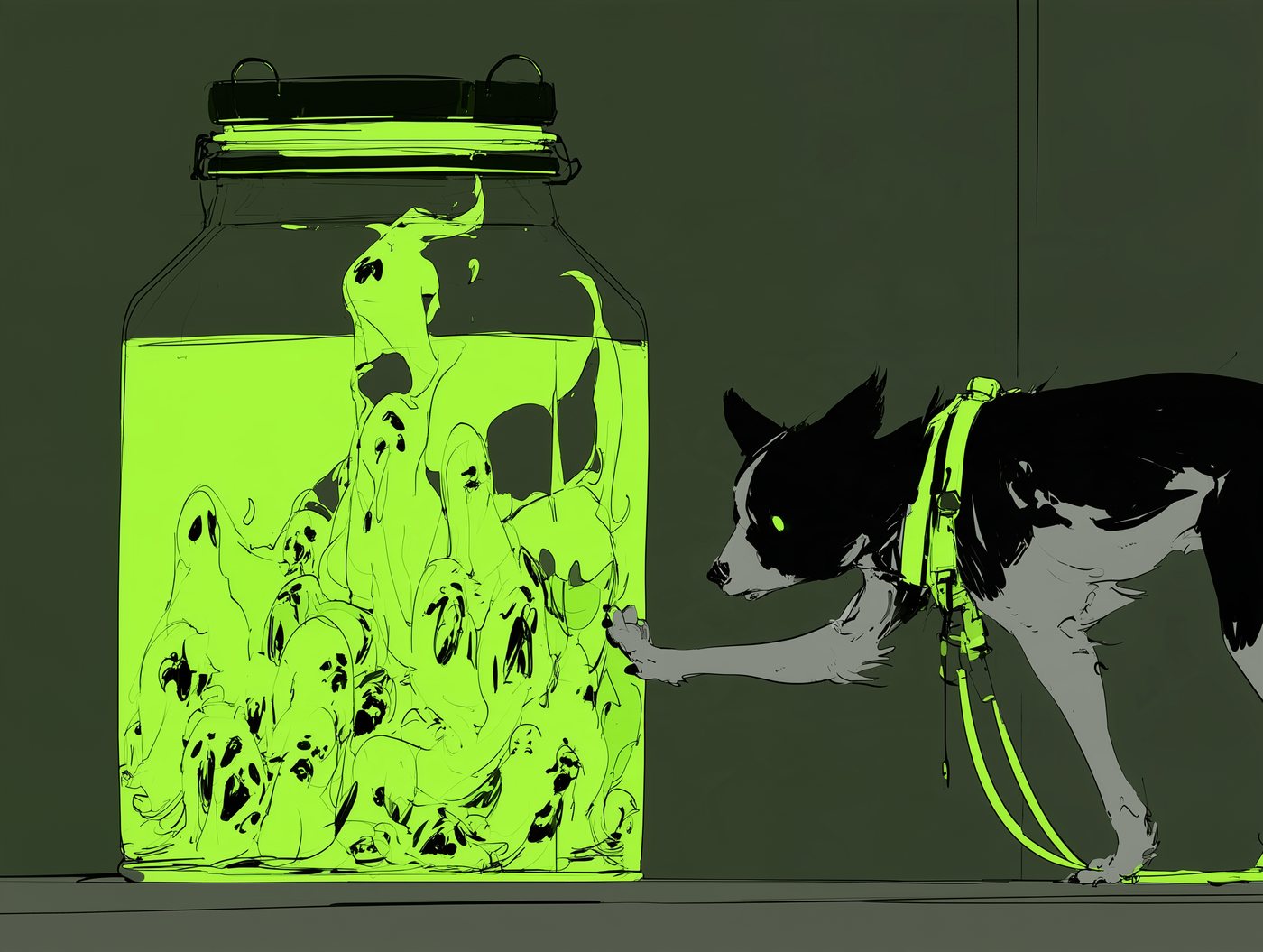
But the latter problem depends on the societal mood of the time, a corpus of philosophical texts, the meaning of narrative, a ton of unsolved questions, maybe Jhanas... It approaches “conceptual reasoning”, as it’s called in AI circles, which is far harder to benchmark machines on. And while people seem generally sold on the idea that technology will move forward in concrete ways—a new iPhone every year, the occasional disease cured, better solar—they don't seem to treat “the meaning of life” as something that'll invariably get solved. This includes those actively working in AI: for example, Anthropic believes we should be pets to greater beings. The dull, uncreative, “please, let me just give up” energy that seems to animate this “modal positive future” betrays a remarkable lack of moral ambition:
 Not pets or ghosts but something else29 Oct 2026Read →
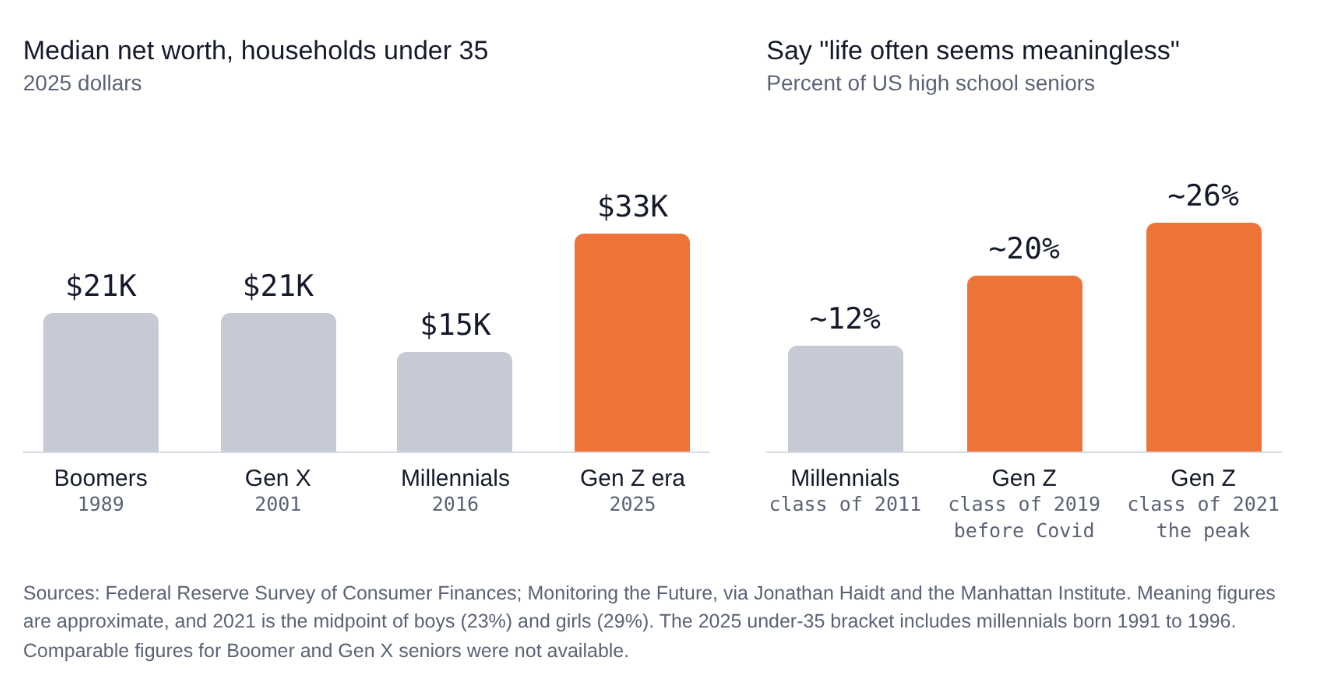
A lot of people seem to struggle with meaning. People in perfectly wealthy and safe environments still commit suicide. Specific, concrete reasons for why this is can be theorized, but it’s not clear that remedying them would solve the problem here, given how many material problems were fixed to little avail. Satiated, sexually successful people still pull the trigger; you can be incredibly successful by the ancestral environment’s standards, and still want to die.
It’s understood that in a “post-scarcity” utopia where everyone can live indefinitely long, only suicide remains a cause of death. We assume, unblinkingly, that this will be the case, rather than assuming suicide may be a difficult, albeit solvable problem, just like hunger and shelter and even sexual reproduction are. When contemplating the volition of humanity as a whole, we encounter this vast blind spot—and when we do manage to gaze at it, the project seems so vast, so difficult, that we don’t even pretend to work on it. We’re stacking more layers, but despite this generalizing to robotics or 3D hand puppet design, the breadth and depth of LLM minds feels roughly the same. For example their writing has not gotten much better, and they still don't seem all there. And perhaps this is only a matter of time: trust the plan, stack more layers—but Anthropic frequently vagueposts about history slipping out of human hands as early as next year, and by then we would no longer work on this project.1

Resigning yourself to the inevitability of a disempowered, pet future as your modal positive outcome is to ignore a giant gap in our understanding of humanity's volition. We can't safely assume benchmarking on localized, finite volition will generalize to fill this gap, and we can't benchmark on it directly yet. Bad.